Chemical analysis / A case report
Identifying AOD-9604 in seized material
An unknown preparation gives chemical analysis a different starting sample from the urine used in the screening method.
The identification case
In a 2014 case report, investigators identified and characterised AOD-9604 in unknown pharmaceutical preparations seized by Belgian authorities. The report documents this growth-hormone fragment in material encountered outside approved channels.
The switch of sample material sharpens this comparison. Here the investigators faced an unknown pharmaceutical preparation; the urine screen discussed on the home page used urine and covered named peptide targets. The kind of sample belongs in the account of each method.
The case establishes AOD-9604’s identity in the seized material. It supplies no reason to carry the urine panel’s detection-limit range over to that preparation.
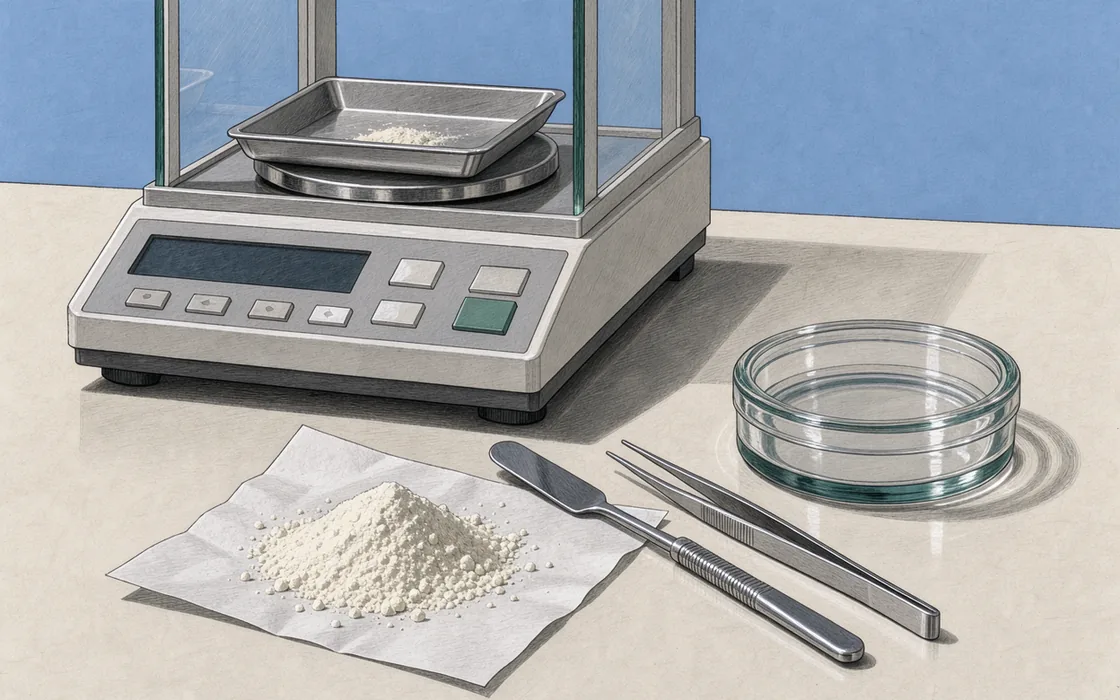
AOD-9604 within sports drug testing
The 2016 screening method included AOD-9604 among low-molecular-mass peptides examined through direct urine injection, liquid chromatography and ion mobility mass spectrometry. The 2017 mass-spectrometry review places peptidic drugs including AOD-9604 within the scope of modern sports drug testing.
Direct urine injection is an appealingly concrete phrase. The 2016 method reported detection limits of 50-500 pg/mL for its peptide panel. That range describes the search performed with that method; the wider review supplies context for sports drug testing, rather than a universal cutoff for every screen.
The cited analytical claims describe methods and their scope; a prevalence estimate would need observations designed to establish prevalence.
The sample and the panel
The in vitro and rodent metabolic studies and the human oral tolerability report give research background for AOD-9604, one of the urine screen’s targets.
The sample and panel are where this analytical question becomes specific. A case report identifying AOD-9604 in seized material and a urine screen covering it are useful at their stated scope. Their shared target does not make the reported urine detection limits apply to both kinds of material.
The fat-metabolism essay follows one set of biological experiments. The human trial record concerns a different population and purpose.