AOD-9604 / Analytical screening
A urine screen opens The Peptide Program
A screening program chooses its targets. The urine method that included AOD-9604 draws me in: which peptides did it cover, and what detection limits did it report?
Direct urine injection
A 2016 analytical method for screening small peptides in sports doping controls included AOD-9604 among the prohibited peptides it covered. The method combined direct urine injection, liquid chromatography and ion mobility mass spectrometry. Its reported detection limits were 50-500 pg/mL, a range for the method’s peptide panel.
The sample gives me a refreshingly finite opening assignment for The Peptide Program: look for a specified substance. AOD-9604 has a place in the method’s named panel. How sensitively could the method search that panel?
A single universal detection limit sounds suspiciously convenient to me. The reported range belongs to this analytical method and its peptide panel. Choosing a value from that range as the exact AOD-9604 limit would erase the panel behind it.
The screening agenda
Program can mean a set of instructions, including instructions about what to search for. In this case AOD-9604 is one of the named targets. A 2017 review of sports drug testing by mass spectrometry likewise includes it among the peptidic drugs within the analytical scope of doping control.
AOD-9604’s place on that target list interests me. A screen has a defined search list, and the performance reported for its panel needs to stay attached to that list. The 50-500 pg/mL range is more informative with the method and its targets beside it.
I favour that precise account of the search: which peptides were covered, which sample material was used and which detection limits were reported. A claim about every peptide or every analytical method would outrun this result.
AOD-9604 in seized material
A case report on preparations seized by Belgian authorities describes the identification and characterisation of AOD-9604 in unknown pharmaceutical material. That is another assignment for chemical analysis: establish what is present in something whose identity is in question.
The seized preparation makes the sample material hard to overlook. A seized pharmaceutical preparation and a urine sample give the analyst different starting material. The case report adds a setting for AOD-9604 analysis; the urine method’s panel range still belongs to its own procedure.
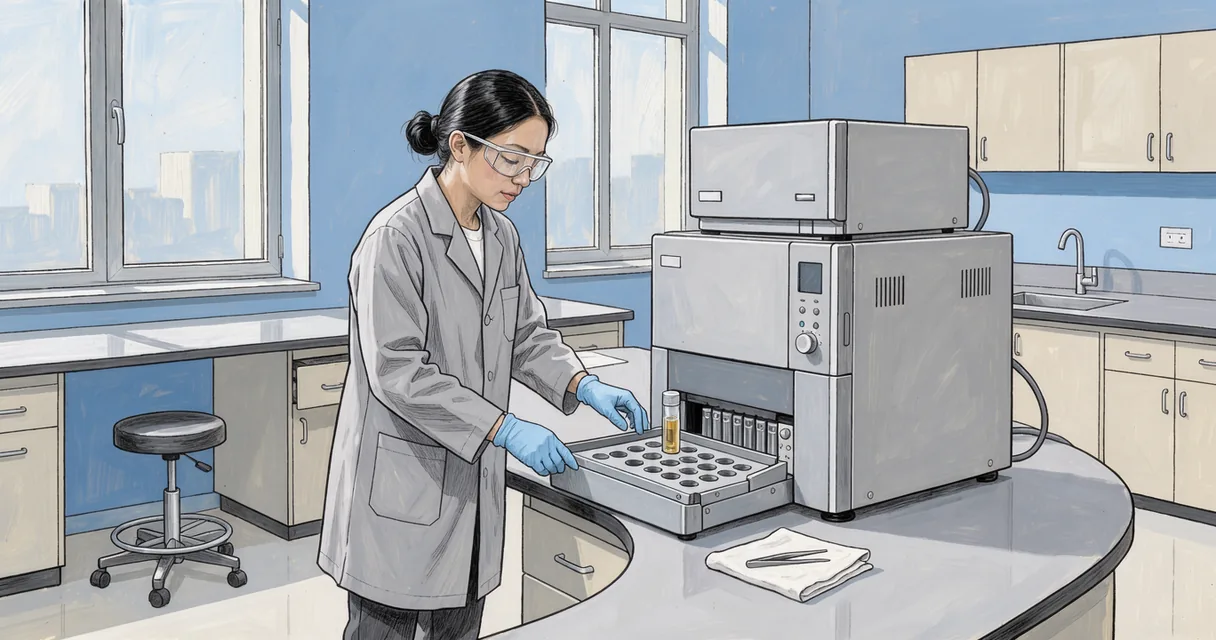
The unknown-preparations essay stays with that case and the wider detection work. The illustration above imagines a screening laboratory; it depicts no particular laboratory or event.
Research background for the screening target
The fat-metabolism experiments give AOD-9604’s research background: isolated rat tissue, followed by mice lacking a particular receptor. The human tolerability report concerns oral exposure in adults with obesity.
Those reports provide context for the named screening target. The central question here remains the reach of the urine method: its selected panel and the detection-limit range reported for that panel. The reading list gathers the original reports and the reviews discussed here.